
How Baltimore Arrests Become Records
Baltimore is an independent city. It keeps records its own way, apart from Baltimore County and Towson. The Baltimore Police Department makes most local arrests. BPD also creates the incident paperwork. Custody is a separate job. The state's DPSCS, through its Division of Pretrial Detention and Services, runs the Baltimore Central Booking & Intake Center, where intake and custody records are made. The Sheriff's Office handles court and civil enforcement but has no role at BCBIC. Follow the record to whichever office holds it. Compare identity, arrest date, agency, and court case as you go.
No government gallery of Baltimore busted mugshots exists. BPD posts a newsroom and a weekly arrest dataset, and neither offers a booking-photo roster. DPSCS runs a limited incarcerated-individual locator. It skips some BCBIC detainees and shows no photo field. Charges also shift over time. A case can be dismissed, changed, placed on stet, dropped by nolle prosequi, or end in acquittal, so the arrest record is only one piece of the picture.
Where Baltimore Busted Mugshots Appear
Start with official sources. They tell you which agency made a record and which one keeps it. Even so, no government page offers a complete or current Baltimore booking-photo list. The table below separates arrest data from custody data and from selected news. When you see "no public photo," read it plainly. The interface simply has no photo field, though an intake image may still exist in the system.
| Channel | Photo? | Status and use |
|---|---|---|
| BPD newsroom | Sometimes, image type varies | Official, selected arrest releases only |
| BPD Arrests service | No | Official weekly statistical data without names |
| DPSCS locator | No public field seen | Official, limited current state custody |
| Maryland Case Search | No | Official court case and disposition summary |
| Local news outlets | Story-specific | Unofficial, selective coverage requiring verification |
| Mugshots.com local landing page | No current entries found | Unofficial and geographically unreliable |
Busted Newspaper, RecentlyBooked, Arrests.org, and Mugshots.zone had no verified active Baltimore City section when checked. That absence proves nothing about whether arrests happened. Mugshots.com does have a local landing page. It lists no current local entries, though, and mixes in places outside the city. Third-party sites go stale, run incomplete, or just get things wrong. Verify any claim you find there against BPD, DPSCS, and the court.
Find Busted Arrests in Baltimore
Searching for a specific person works best as a chain of steps. The citywide dataset can confirm when and where an event took place. But its public schema leaves out names and photographs. The DPSCS locator sits at a different custody stage. It drops anyone no longer held. Work the steps in order. A missing result at one point is never the final answer.
- Confirm the arrest happened inside Baltimore City, not Baltimore County, and note the approximate date and arresting agency.
- Search the BPD newsroom for a selected release and check the image label before calling it a booking photo.
- Review the BPD weekly arrest data for date, charge, location, district, or incident clues.
- Use the DPSCS locator by first and last name for its limited current-custody scope. A missing result is not proof of no booking.
- Search Maryland Case Search by exact name or, preferably, case number to find the later court result.
- Request the intake record or identification photograph from DPSCS and request police-held records separately from BPD.
The broader Baltimore City booking guide walks through the county-equivalent systems and custody stages in more depth. A newly booked person, a released person, and someone committed to state prison can surface in three different places. Release after the commissioner hearing is a good example. The person vanishes from custody search even though the arrest and court records remain intact.
Baltimore Busted Arrest Data
For citywide arrest data, BPD's official Arrests service is the strongest public feed. Treat it as event data, not a name lookup. Its fields cover arrest date and time, arrest and incident locations, charge and charge description, district, post, neighborhood, age, gender, race, and geographic identifiers. Names are absent. So are booking numbers, bonds, court dates, release dates, and photographs. BPD notes that its executive arrest statistics are updated by the ComStat Unit every Thursday. They remain preliminary, so figures can shift. The official BPD weekly arrest interface shows how the city publishes structured event data without ever exposing a mugshot feed.
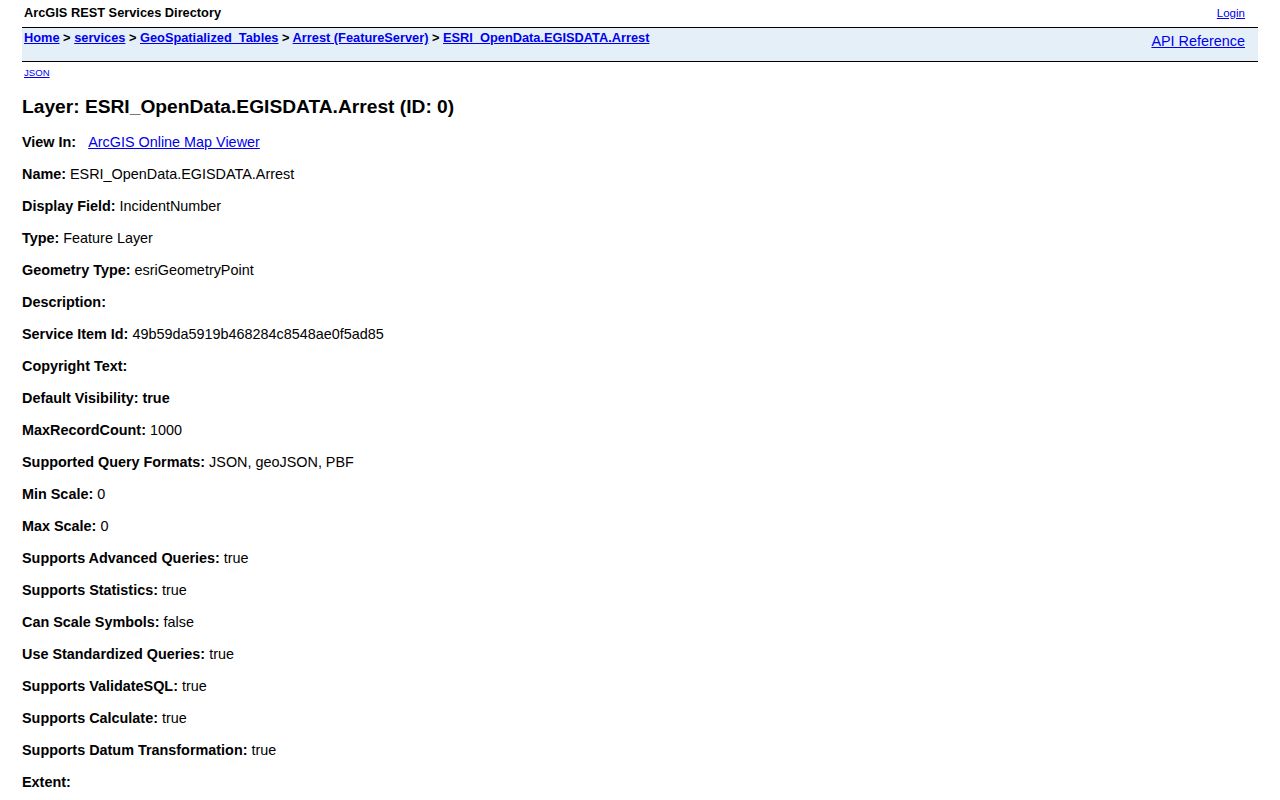
The interface earns its keep for context. Place, time, charge, and district all come through clearly. It cannot match a booking photo to a name, though. Avoid pairing it with a third-party image to guess at identity.
When Baltimore Mugshots Become Available
Nobody runs Baltimore's central intake on a verified public posting clock. A historical Maryland Manual sketches the old routine. Barcode assignment came first. Then personal and descriptive data, fingerprints, a digitized video photograph, charges entered by the arresting officer, and an initial commissioner hearing. That account dates to 1997. It shows the steps but cannot pin down today's workflow or any publication timing. Current BPD policy adds one firm rule. A warrant arrestee should reach the Central Booking Intake Facility without needless delay and within 24 hours, unless medical needs intervene. That rule governs transport only, not photo release.
No official BCBIC list with names and photos goes out on a same-day, 24-hour, 48-hour, or 72-hour schedule. BPD news may highlight a selected arrest soon after the event, while the dataset updates weekly. DPSCS publishes no booking cadence for BCBIC at all. So there is no honest answer like "wait a few hours." For a precise photo or intake record, a targeted Maryland Public Information Act request is the dependable route.
Baltimore Police Booking Records
Match each request to the office that holds it. BPD keeps arrest and incident reports. It also holds warrant applications, dispatch logs, scene photos, body-camera files, and anything its newsroom released. The rest sits elsewhere. Booking and intake records, fingerprints, custody details, and the booking photo belong to DPSCS or DPDS through BCBIC. Keep the two straight. An image from a police news release is often not the BCBIC booking photo.
- For an incident report, use the BPD report form and send it to the Community Correspondence Unit at ccu@baltimorepolice.org.
- For other police records, write the Document Compliance Unit at dcu@baltimorepolice.org.
- Give a full name, arrest date, incident or case number, and a narrow description of each requested record.
- For the actual BCBIC intake and photo, submit DPSCS Form 020.0023AR separately.
- Ask each custodian for the disclosable portion and the legal basis for any withheld or redacted material.
Baltimore Police Records
Office of Legal Affairs
242 W. 29th Street
Baltimore, MD 21211
PIA representative: 410-396-2495
Non-emergency: 311
BPD aims to produce disclosable incident reports within 30 days, though review can run longer. Maryland law generally calls for a prompt grant or denial within 30 days, plus a notice when more than ten working days are needed. Fees can apply after that notice. Release is not guaranteed. Juvenile, investigative, sealed, expunged, and other protected material may be withheld.
Busted Records Across Baltimore Agencies
The DPSCS locator asks for a first and last name. It is no live BCBIC roster, though. Coverage stops at people committed to the Commissioner of Correction, people at Patuxent Institution, and some short-sentenced people in DPDS. DPSCS states this plainly. Not everyone in custody appears, and released people are removed. The visible interface offers no booking-number, date-range, charge, bond, or photo search field at all.
| Stage | Best source | Key limit |
|---|---|---|
| Recent police arrest | BPD newsroom or weekly data | Selected news or unnamed statistics |
| BCBIC intake | DPSCS PIA request | Disclosure review and possible redaction |
| Current state custody | DPSCS locator | Not everyone appears; no photo field |
| Released person | BPD/DPSCS records and court | Gone from custody locator |
| Filed criminal case | Maryland Case Search | Summary; restricted cases omitted |
This is why a person can appear in Baltimore arrest data without a public photo or current locator result. The arrest record reflects an event. The locator reflects only part of current custody. The court docket tracks what happened to the charge after booking.
Baltimore Mugshots in Local News
Start with the BPD newsroom for any news search. It is the agency's own release channel, and its posts follow events: homicides, shootings, robberies, warrant arrests, and other major investigations. Some posts carry an image. It might be a police-supplied portrait, a scene photo, or a video still. Call it a booking photo only if the agency does.
WBAL, CBS News Baltimore, The Baltimore Banner, WMAR-2, The Baltimore Sun, and Fox 45 all cover selected city arrests. None serves as a complete BCBIC photo roster. Each also reports on Baltimore County and the wider region, so confirm both the location and the police agency named in the story. The Banner leans into criminal justice reporting and court follow-up. The broadcast outlets tend to push frequent police and court updates. Either way, news adds context rather than an official custody status.
Put commercial arrest sites last. The Baltimore City routes checked here were mostly absent, blocked, or inactive. The lone local Mugshots.com page held no current entries on top of a flawed geographic index. An old third-party result says nothing about custody today. For a fuller account of these source types, see Mugshots in the News, then go back to the originating agency and the court docket.
Busted Charge Versus Court Result
A booking charge captures what police alleged at intake, nothing more. The final result lives in the courts. Maryland Case Search can display the District or Circuit Court docket once a case is filed. Use a case number when you have one. Otherwise, search an exact party name and match the dates with care. Possible outcomes include conviction, dismissal, acquittal, a not guilty finding, nolle prosequi, stet, probation before judgment, and more. Nolle prosequi means the prosecutor declined to proceed. A stet puts the charge on an inactive docket under court rules.
Case Search is a summary, not the full official file. Juvenile, sealed, shielded, expunged, and other confidential records may simply be missing. Some favorable outcomes can vanish from the online view too. If the summary leaves you unsure, ask the Baltimore City clerk for the docket or disposition. That court result is the correction a charge-only news story or an old booking reference always needs.